
 RTC
RTC
 BLK360
 BLK2GO
 BLK ARC
 BLK2FLY
 BLK3D
BLK3D
 Accessories

Well documented and on display, Underground Railroad sites—physical remnants of an important part of American history—still exist in streets, churches, and buildings across America.
Built in 1853, the Crete Congregational Church in Crete, Illinois, continues its transformation into a museum while preserving its connection to the network formed during the 19th century that assisted enslaved people in escaping American slavery and gaining their freedom.
Some structures that still exist in America today are evidenced to be connected to the Underground Railroad: a diverse hidden network of various buildings, homes, roads, and spaces serving as locales to share information, provide shelter, food, respite, and directions to freedom, safely concealed from the knowledge of slaveholders and the public.
In 2018, the National Park Service granted the Crete Congregational Church official designation as a National Network to Freedom site.
Gannett Fleming-TranSystems and The Crete Area Historical Society in Illinois are documenting this site so that this history continues to be present for generations to come.
We discuss how the Leica BLK360 was used to digitize the church before renovations began and explore the project's meaning for the transportation and engineering firm with Gannett Fleming-TranSystems' Steven Youschak, Unmanned Aircraft Systems (UAS) Program Director and Todd Herman, Lead Vice President.
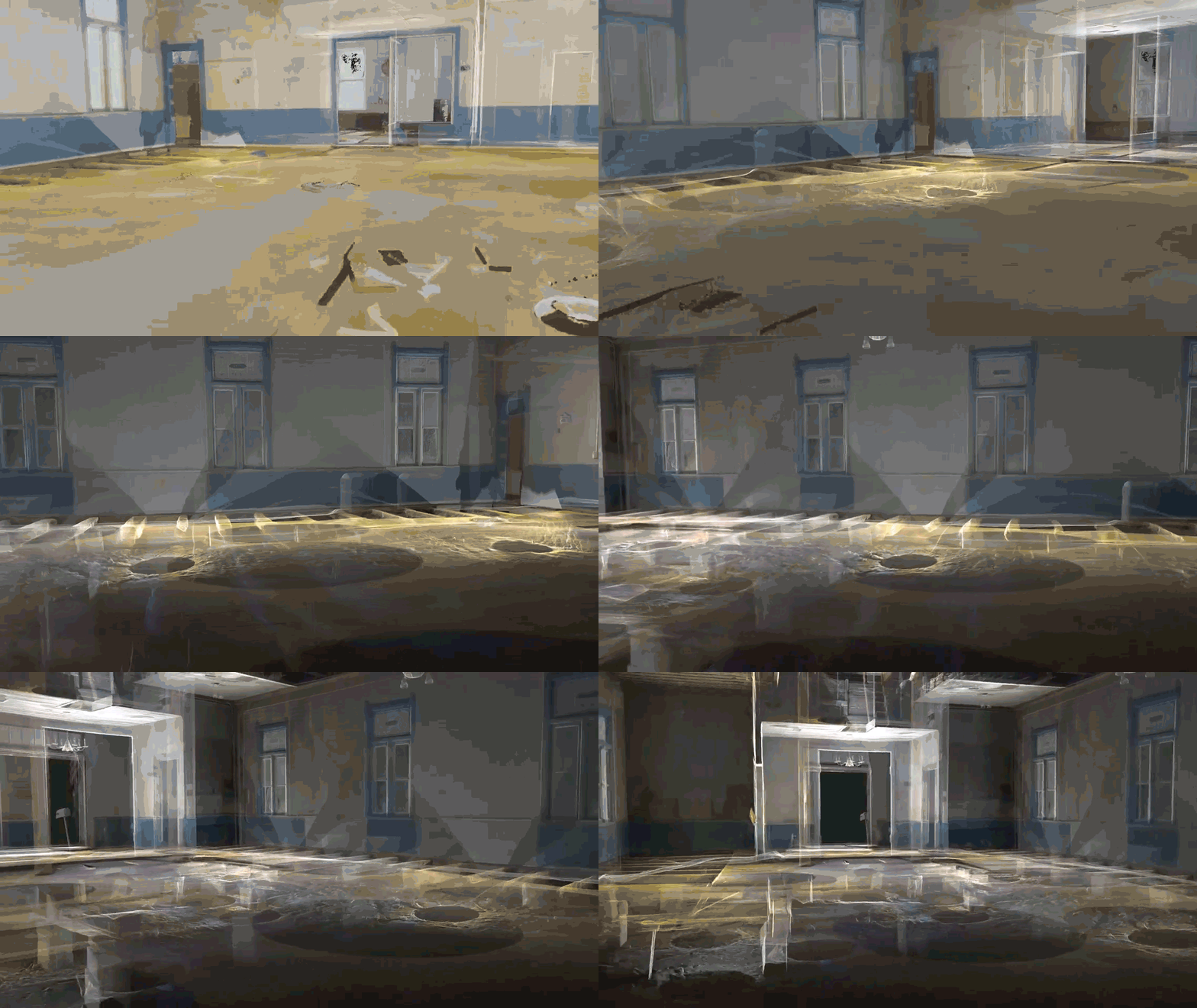
Click here to view the full fly-through
Q&A with Gannett Fleming-TranSystems on digitizing history
How did digitizing the Crete Church project begin for TranSystems?
Steven: Well, several folks in our Chicago office are quite involved in their local community; for this project, one of our team members, Michael Wiater (a VP in Chicago), reached out to our Reality Capture Team. The aim was to explore the possibility of performing a 3D scan of the church to document and preserve a permanent record of the original church construction before extensive rehab work that would remove significant parts of the structure began.
Michael also serves as Director of the Crete Area Historical Society. He shared with us the history of the building – and we knew we’d like to expand our work on historical preservation projects further. Before now, our Reality Capture Team has worked on documenting and restoring aging bridges, many of which have been in use since the early 19th century.
So, is the team used to capturing historical sites?
Todd: Yes, but what’s unique about this project is that before, when we’ve done historical preservation, we used photography to document historical bridges for repair and maintenance.
With the BLK360, we captured the space for audiences to see what the church used to look like. Because the Crete Church was an underground railroad site that occupied the building at the time, the building has a lot of historical relevance. The digital twin of the interior of the church will be showcased in the museum so people can view the original state of the building before renovation begins.
Why did you choose the BLK360 for this job?
Todd: When it came to choosing a scanner for this job, we were looking for flexibility and 'line of sight,' i.e., what we physically had to work with when it came to square feet and how much of the area the scanner can capture during a single scan. With this site, the space was fairly small and confined. We knew we had to create overlap with the scans, so we decided on the BLK360 scanner.
Because of its size, when Ryan Fiol arrived on site, he was able to enter into a crawl space underneath the floor and scan, capturing the details from the foundation and documenting the trusses and the floor beams underneath, as well as their condition. With the BLK360, we can connect it to our laptops and iPads; for this project, we needed that connectivity to view the data in real time. It all worked out pretty slick!
What was the process of scanning the church for the reality capture team? Because renovations were underway, was there a rush to capture everything?
Todd: Our Ryan Fiol did the capturing for us with the BLK360. Before scanning, the Crete Church team had removed everything from the building. The floor needed to be replaced for safety concerns. So, while Ryan wasn’t in danger, the ability to capture everything as it was with the original architecture still in place made the project that much more important.
Ryan could reach an upper portion of the church but couldn’t get up to the ceiling, but because of the BLK360’s range, scans captured from the ground floor and the upper portion meant Ryan could still capture the ceiling’s architecture in addition to areas underneath the floor like the floor joists.
What was the process from the first scans to the finished fly-through of the church?
Todd: Our normal procedure for scanning sites involves first using photos provided by the client and Google Earth. With these photos, we break down the scope of the project, the setting, and various aspects of the site.
From there, we estimate where on site we’ll be scanning from, keeping an eye out for potential overlap and anticipating the number of scans we’ll have to do once on site. Of course, when we get there, we might have to adjust, but having a strategy before we arrive on-site makes the process go as smoothly as possible.
Once Ryan scanned the entire church, we used Leica Cyclone REGISTER 360 PLUS to process the data and create our point cloud. Then, we used a downloadable tool that works with .b2g files to transform the still image into a fly-through.
What makes preservation projects critical to Gannett Fleming-TranSystems' mission? Why was it important to partner with the Crete Area Historical Society to deliver this data?
Todd: At TranSystems, we consider transportation a service to our communities. Whether we're building a new highway or helping to restore an old historical site, we see our projects as opportunities to provide great value to people.
Steven: We find it amazing how technology can showcase this history in a way that the average person would've never been able to see or experience. Specifically, with the Crete Church project, we can provide a digital model of a building's original architecture that served those escaping slavery, and people will be able to view it for generations. With this project, the data and history will live on.
Ready to add accurate digital twins to your historical preservation portfolio? Learn more about the Leica BLK series of reality capture devices here.
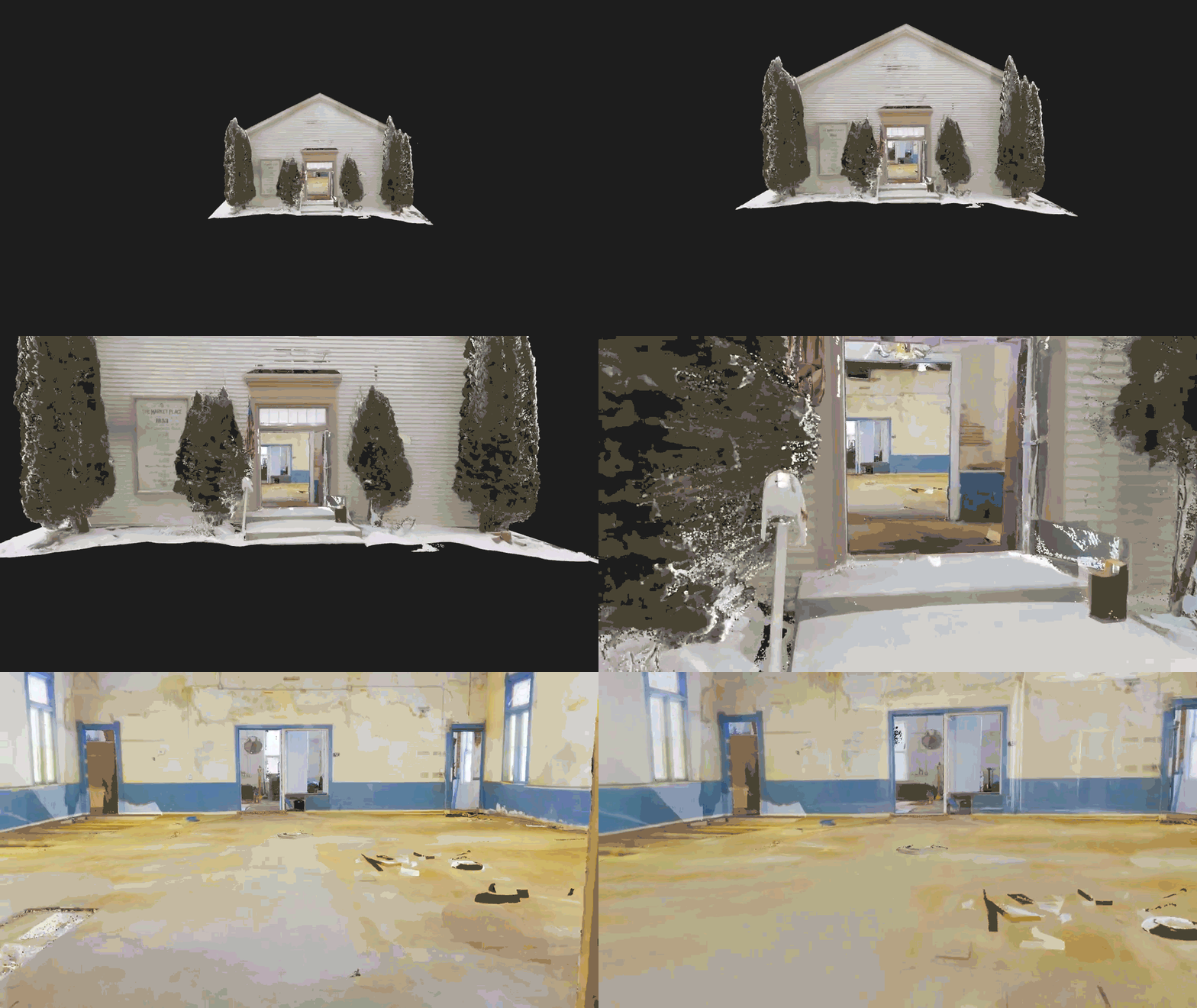
Read Steven Youschak’s original post about Gannett Fleming-TranSystems and the Crete Congregational Church here.


